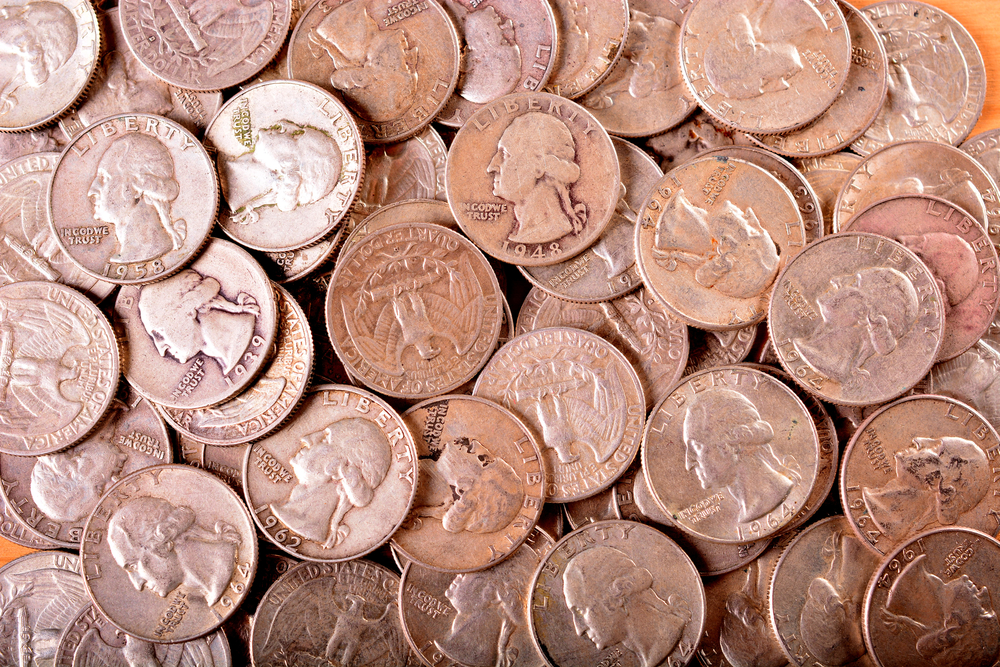
The Washington Silver Quarter is one of the most collected United States coins ever produced. Struck with 90% silver for more than three decades, these quarters appeal to collectors, investors, and anyone who has discovered old coins tucked away in drawers, inherited collections, or family safes.
While many Washington silver quarters are worth only their silver content, others command substantial premiums because of their rarity, condition, mint mark, or striking errors. Knowing what separates an ordinary silver quarter from a highly collectible example can make a significant difference when buying, selling, or building a collection.
Whether you own a single coin or an entire roll of vintage quarters, understanding the Washington silver quarter series is the first step toward determining its true value.
What Is a Washington Silver Quarter?
The Washington silver quarter is the 25-cent coin issued by the United States Mint beginning in 1932 to commemorate the 200th anniversary of George Washington’s birth. The design proved so popular that it permanently replaced the Standing Liberty Quarter.
Every Washington quarter minted from 1932 through 1964 contains:
- 90% silver
- 10% copper
- Approximately 0.1808 troy ounces of pure silver
- A weight of 6.25 grams
In 1965, rising silver prices led the U.S. Mint to eliminate silver from circulating quarters. Since then, standard circulation quarters have been produced using a copper-nickel clad composition.
As a result, any Washington quarter dated 1964 or earlier is considered a Washington silver quarter.
The History of the Washington Silver Quarter
The Washington quarter debuted during one of America’s most difficult economic periods—the Great Depression. Originally intended as a one-year commemorative coin, public demand quickly transformed it into the nation’s permanent quarter design.
Designed by sculptor John Flanagan, the coin features:
Obverse
The front displays a left-facing portrait of George Washington along with:
- LIBERTY
- IN GOD WE TRUST
- Date
Reverse (1932–1998)
The classic reverse features:
- An American eagle with spread wings
- Two olive branches
- UNITED STATES OF AMERICA
- E PLURIBUS UNUM
- QUARTER DOLLAR
This iconic reverse remained unchanged for more than 65 years before the State Quarters Program began in 1999.
Which Washington Quarters Are Silver?
This is one of the most common questions collectors ask.
Every regular-issue Washington quarter dated:
- 1932
- 1933
- Through 1964
contains 90% silver.
Quarters dated 1965 and later generally do not contain silver unless they were specially produced as collector editions.
An easy way to identify a silver Washington quarter is by checking the edge of the coin. Silver quarters have a solid silver-colored edge without the orange or copper stripe visible on modern clad coins.
Washington Silver Quarter Specifications
Understanding the coin’s physical characteristics helps identify genuine examples.
| Specification | Details |
| Years Produced | 1932–1964 |
| Composition | 90% Silver, 10% Copper |
| Weight | 6.25 grams |
| Diameter | 24.3 mm |
| Edge | Reeded |
| Pure Silver Content | 0.1808 Troy Ounces |
| Face Value | 25 Cents |
Washington Silver Quarter Value
The value of a Washington silver quarter depends on several factors beyond its face value.
Silver Content
Even common-date coins have intrinsic value because they contain precious metal.
As silver prices fluctuate, the melt value rises and falls accordingly. This means that worn Washington silver quarters are almost always worth significantly more than twenty-five cents.
Collector Demand
Collectors often pay premiums for:
- Early dates
- Low mintage years
- Exceptional preservation
- Original surfaces
- Attractive toning
- Certified examples
Mint Mark
Washington quarters were struck at several U.S. Mint facilities.
Mint marks include:
- No mint mark (Philadelphia)
- D (Denver)
- S (San Francisco)
Certain mint mark combinations are substantially scarcer than others.
Condition
Coin grading has a major impact on value.
Typical grades include:
- Good (G)
- Very Good (VG)
- Fine (F)
- Very Fine (VF)
- Extremely Fine (XF)
- About Uncirculated (AU)
- Mint State (MS)
The difference between a circulated coin and an uncirculated example can be hundreds—or even thousands—of dollars.
Key Date Washington Silver Quarters
Some dates are significantly more valuable than others.
1932-D
The 1932-D quarter is among the most famous coins in the entire series.
Its relatively low production makes it one of the toughest Washington quarters to locate in high grades.
1932-S
Like the Denver issue, the San Francisco coin had a limited mintage and remains highly desirable.
Collectors often pay substantial premiums for original, problem-free examples.
1936 Doubled Die Obverse
This dramatic variety shows noticeable doubling in portions of the lettering and date, making it popular among error collectors.
1937 Doubled Die
Several doubled die varieties exist that continue attracting specialists.
1943-S Doubled Die
This wartime variety is another sought-after collectible within the Washington quarter series.
High-Grade Common Dates
Even common years can become surprisingly valuable when preserved in exceptional Mint State grades with strong eye appeal.
Rare Washington Silver Quarter Errors
Mint errors add another layer of collectibility.
Popular error types include:
Doubled Dies
Design elements appear doubled due to the die creation process.
Off-Center Strikes
The design is misaligned because the planchet was improperly positioned during striking.
Clipped Planchets
Part of the coin’s edge is missing due to an improperly punched blank.
Die Cracks
Raised lines appear across the surface as aging dies begin to fail.
Repunched Mint Marks
Older Washington quarters occasionally display mint marks punched more than once.
Authenticating valuable error coins through professional grading services is generally recommended.
Are Washington Silver Quarters a Good Investment?
Many investors appreciate Washington silver quarters because they combine bullion value with collector demand.
Benefits include:
- Recognized worldwide
- High liquidity
- Historic significance
- Silver content
- Large collector base
- Easy storage
Unlike modern bullion products, some Washington silver quarters appreciate for reasons beyond silver prices alone.
Rare dates, exceptional grades, and scarce varieties may outperform bullion during strong numismatic markets.
How to Identify a Valuable Washington Silver Quarter
Several characteristics deserve careful attention.
Check the Date
Coins dated between 1932 and 1964 are silver.
Examine the Mint Mark
The mint mark appears on the reverse beneath the wreath on earlier issues.
Look carefully for:
- D
- S
- No mint mark
Evaluate Wear
Less wear generally means higher value.
Inspect:
- Washington’s hair
- Cheek
- Eagle’s breast feathers
- Wing details
- Letter sharpness
Look for Original Luster
Uncirculated coins often retain bright mint frost or satiny surfaces that collectors value.
Watch for Damage
Cleaning, scratches, corrosion, holes, or environmental damage can significantly reduce collector value.
Building a Washington Silver Quarter Collection
The Washington series offers several enjoyable collecting approaches.
Some collectors pursue:
- Complete date-and-mint collections
- High-grade certified sets
- Silver-only collections
- Toned examples
- Error varieties
- Proof coins
Because the series spans more than three decades, collectors can build impressive sets while gradually upgrading higher-value pieces.
Proper Storage for Washington Silver Quarters
Protecting silver coins preserves both beauty and value.
Recommended storage options include:
- Mylar flips
- Coin albums
- Hard plastic capsules
- Certified grading holders
- Acid-free storage boxes
Avoid cleaning coins before storing them. Even gentle polishing can permanently reduce collector value.
Handle coins only by their edges whenever possible.
Selling a Washington Silver Quarter
If you’re considering selling a Washington silver quarter, taking a thoughtful approach can help you receive a fair price.
Start by determining:
- Date
- Mint mark
- Overall condition
- Whether the coin has any notable varieties or errors
- Current silver market prices
For higher-value pieces, professional grading may increase buyer confidence and improve marketability.
Working with an established precious metals and rare coin dealer also provides access to experienced evaluations and current market pricing.
At KC Gold Silver & Rare Coins, knowledgeable professionals help customers evaluate Washington silver quarters based on both bullion value and collectible demand. Whether you’re selling a single inherited coin or an entire collection, an expert appraisal can help you understand what your coins are truly worth.
Want to sell your silver quarters? Be sure to give us a call, we’re always buying Washington silver quarters, silver bullion, and other silver coins. We also have silver to buy, if you’re looking to add to your collection or add to your silver stack, we have the best prices in town.
Why Collectors Continue to Love the Washington Silver Quarter
Few American coins combine history, accessibility, and investment potential as effectively as the Washington silver quarter.
The series spans important moments in American history, contains genuine precious metal, and offers opportunities for collectors at every budget level. Beginners can assemble attractive circulated sets, while advanced numismatists pursue rare varieties and top-population certified coins.
Decades after silver disappeared from everyday circulation, these quarters continue to capture the attention of collectors and investors alike.
FAQ About Washington Silver Quarter
How can I tell if my Washington quarter is silver?
A Washington quarter dated 1932 through 1964 is made from 90% silver. You can also examine the edge of the coin. A solid silver-colored edge typically indicates a silver quarter, while a visible copper stripe usually means it is a modern clad coin.
What is a Washington silver quarter worth today?
The value depends on the coin’s silver content, date, mint mark, condition, rarity, and current silver prices. Common circulated examples are generally worth more than their face value because of their silver content, while rare dates and high-grade specimens can be worth hundreds or even thousands of dollars.
Which Washington silver quarter is the rarest?
The 1932-D and 1932-S Washington silver quarters are considered the key dates of the series due to their relatively low mintages and strong collector demand.
Are all Washington quarters made of silver?
No. Only regular circulation Washington quarters minted from 1932 through 1964 contain 90% silver. Most quarters produced in 1965 and later are copper-nickel clad, although some modern collector editions contain silver.
Should I clean my Washington silver quarter?
No. Cleaning a coin can permanently damage its surface and significantly reduce its collector value. Most collectors and professional dealers strongly recommend leaving coins in their original condition.
Is it better to sell Washington silver quarters individually or as a collection?
It depends on the coins. Common-date silver quarters are often sold in groups based on their silver content, while key dates, rare varieties, and high-grade examples are usually worth more when sold individually after careful evaluation.
Where can I sell a Washington silver quarter?
Reputable coin dealers, precious metals buyers, auction houses, and specialized numismatic businesses are common options. If you own rare or high-grade Washington silver quarters, working with an experienced dealer such as KC Gold Silver & Rare Coins can help ensure you receive an accurate appraisal based on both collectible value and current precious metal prices.